by Renée Tkach, Conservation Director, and Madison Kenney, Advocacy & Policy Coordinator
In a year defined by federal rollbacks, budget cuts, and proposals to dismantle critical conservation laws, Friends, alongside our community of supporters and citizen activists, has led efforts to protect the landscapes and communities that depend on a healthy, resilient Gorge. From advocating for the Gorge Commission’s budget to helping to stop the largest proposed public lands selloff in U.S. history, it’s now clear that the future of this place depends on all of us showing up. In 2025, you did just that.
The work we do at Friends goes far beyond protecting scenic views. Our work is about protecting the future of this landscape in a changing world. Every effort we make, from defending the Columbia River Gorge Commission’s budget to protecting the Land and Water Conservation Fund and pushing back against attempts to sell off public lands, is rooted in one core belief: a healthy, protected Gorge is essential to our region’s climate resilience.
These are not isolated fights, but hit at the core of conservation in the Gorge. Together, they ensure that forests can recover from wildfires, that clean rivers and habitats remain intact, and that future generations have access to the lands that sustain both wildlife and communities.
In an era of unprecedented wildfires and climate challenges, this work matters more than ever. By standing up for the laws, funding, and protections that keep the Gorge whole, we’re ensuring the resilience of a landscape that is essential to the ecological and cultural health of the PNW.
This year began with the Trump Administration ushering in a series of attacks on our environment and public lands. After the November election, it was clear that new threats were coming, as promises of deregulation were central to the campaign. However, the scale of attacks was overwhelming, as the administration used the tactic of “flooding the zone” by announcing countless policies all at once, in hopes that advocates and organizations would have inadequate time and resources to respond to them.
The first sign of worse to come was the massive reductions to the federal workforce, hitting natural resource agencies at all levels: D.C. policy offices, regional field offices, and rangers on the ground protecting our public lands. They also announced plans to vastly increase logging of our federal public lands, as well as other extractive industries like oil and gas drilling. This summer, many organizations launched campaigns opposing the rescission of the Roadless Rule, a policy which has protected non-wilderness National Forest lands.
We’ve also seen the withdrawal of the federal government from the Resilient Columbia Basin Agreement, an accord promoting salmon recovery signed in 2023 with the four Columbia River treaty Tribes and the states of Oregon and Washington, marking yet another broken promise made to Tribes in the United States.
Friends has focused our advocacy efforts around three main campaigns that directly tie into our work: defending the Gorge Commission’s budget, opposing the federal lands selloff proposal, and advocating for the Land and Water Conservation Fund.
Gorge Commission Funding
2025 marked “long sessions” for both the Oregon and Washington legislatures. In long sessions, both states’ legislatures must pass a budget for the upcoming biennium, a two-year period beginning July 1, 2025 and running through June 30, 2027.
Entering the Washington legislative session, the state was facing a significant budget shortfall, and legislators knew that rather significant cuts would need to happen to programs. Additionally, the Trump Administration’s promises to cut federal programs in order to deliver tax cuts created a highly uncertain environment for state budgets, as there could be a need to redirect funds to fill gaps created by the federal government.
During a long meeting of the House Appropriations Committee, where committee members were reviewing and proposing amendments to the state budget, Ranking Member Representative Travis Couture (R-35) proposed an amendment to fully eliminate funding for the Gorge Commission. As the Gorge Commission was a relatively unknown agency among Washington legislators, no one objected to this proposed cut, and the House version of the budget bill passed out of committee with no funding for the Gorge Commission.
If this had gone forward, the Commission would have been unable to carry out its essential mission of protecting scenic landscapes, wildlife habitat, farmland, and cultural resources across the six Gorge counties. Rural communities would have been left without coordinated land use oversight, leaving the Gorge vulnerable to real estate pressure from outside money, sprawling residential and commercial development, and large-scale industrial projects that would forever alter the character of this treasured landscape.
Friends immediately launched a public campaign, mobilizing advocates, business owners, and community members to contact state legislators to demand that funding be restored in the final budget.
As we look ahead to next year, federal cuts to programs like Medicaid are requiring the states to revise their budgets during the upcoming “short session.” Friends staff will be actively engaging in both states’ legislatures to protect the current funding level for the Gorge Commission from any further cuts.
Federal lands selloff
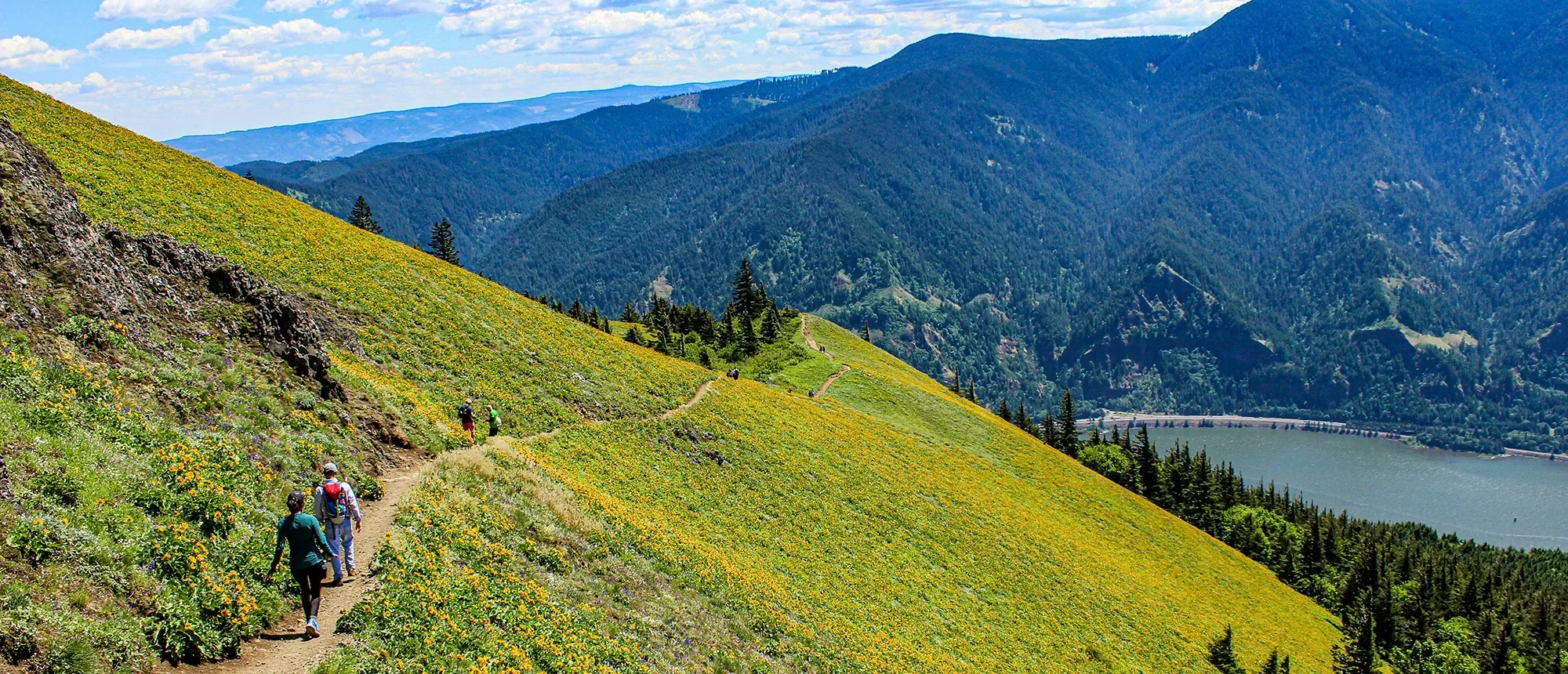
In early summer 2025, a provision in the “Big, Beautiful Bill” threatened the largest public land sell-off in U.S. history, mandating the sale of 2.2 to 3.3 million acres without public input or environmental review. While national parks and wilderness areas were protected, National Scenic Areas, including the Columbia River Gorge, were at risk. Over 22,000 acres—home to iconic sites like Dog Mountain and Eagle Creek—could have been sold to developers, damaging critical habitats and recreation areas.
Friends of the Columbia Gorge quickly rallied, teaming up with national conservation groups. More than 4,000 people voiced their opposition to Congress, and a powerful social media campaign brought national attention. In July, the Senate parliamentarian ruled the provision violated Senate rules, effectively blocking it. This grassroots victory highlighted the importance of public pressure and collective action in preserving our public lands.
Land and Water Conservation Fund
The Land and Water Conservation Fund (LWCF) has been the cornerstone of American conservation for more than 60 years, protecting treasures like the Gorge while supporting local parks in nearly every county. In 2020, the Great American Outdoors Act ensured $900 million in permanent annual funding. Signed into law by President Trump, this bill was a bipartisan victory designed to protect LWCF’s mission of conservation and public access. Despite President Trump’s prior support of LWCF, his administration’s Fiscal Year 2026 budget proposal sought to divert $387 million in LWCF funding from its core conservation mission to instead fund deferred maintenance, including projects to support timber production. During the Congressional budget process, both the House and Senate strongly rejected this proposal and protected LWCF funding in the federal budget.
But now, the Administration is implementing new attacks on LWCF. Secretary of the Interior Doug Burgum recently released Secretarial Order 3442 which contains provisions that will halt LWCF projects and undermine this program. The order allows states and counties to veto projects, restricts partnerships with nonprofits, and even opens the door to selling off federal lands by letting states use LWCF funds to buy “surplus” federal property. These changes undermine the law’s intent, jeopardize conservation gains, and risk stalling projects that support rural economies and public access to the outdoors. While SO 3442 does not attempt to reallocate LWCF funds to deferred maintenance—a sign that strong advocacy helped deter that move—its provisions still pose a serious risk to conservation efforts nationwide.
In September, Friends staff traveled to Washington D.C. to meet with House and Senate offices, urging lawmakers to uphold LWCF’s mission, oppose SO 3442, and ensure the program remains a tool for conservation and public access rather than land disposal.
Looking ahead
Friends is prepared to continue our strong advocacy during the Oregon and Washington short legislative sessions. We will continue to oppose any attacks on our public lands and successful conservation programs from the Trump Administration.