PRESS RELEASE
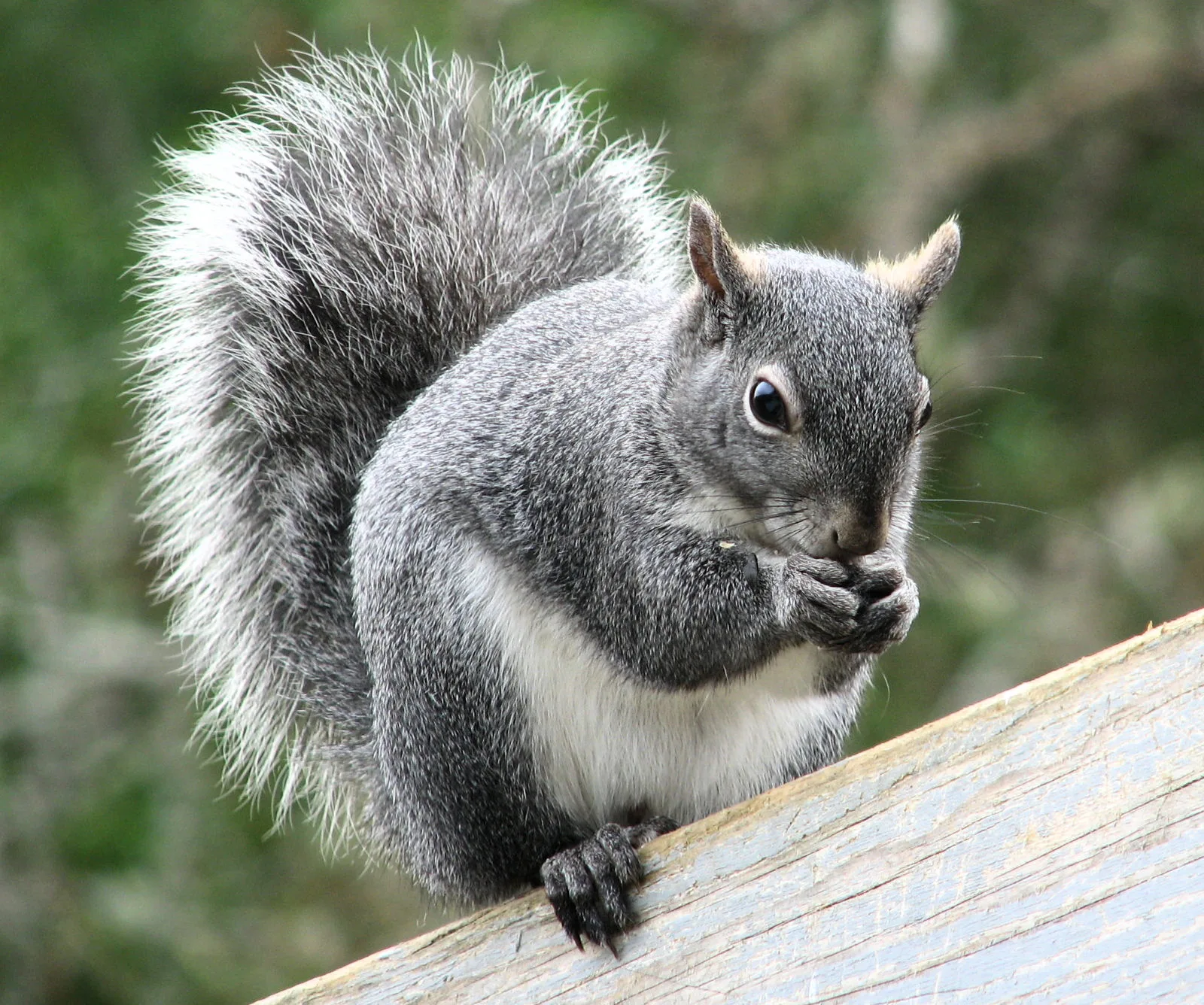
COLUMBIA RIVER GORGE, Wash., February 20, 2026 – A decision by the Washington State Court of Appeals on February 9, 2026, adds significant momentum to efforts to protect the state-endangered western gray squirrel in Washington, particularly in Klickitat County. The appeals court decision also highlights the ongoing failures of the Washington Department of Natural Resources to comply with the law and propose critical habitat for this imperiled species, as required by state law.
In its decision, the court of appeals confirmed that a coalition of local, regional, and international conservation organizations have standing to sue the Department of Natural Resources and Washington Public Lands Commissioner Dave Upthegrove for their ongoing failures to perform mandatory duties required by state law, including a requirement to propose critical habitat for the squirrel following its formal listing in late 2023 as a state endangered species.
State law requires the DNR to perform various duties within 30 days of a species’ listing as endangered, including a formal proposal for critical habitat for the species. The DNR’s deadline to perform these duties for the western gray squirrel was in January 2024. Yet, more than two years later, the agency still has not performed its duties for the species.
At oral argument in the appeal, Court of Appeals Judge Ian Birk spoke to the DNR in blunt terms, stating, “You’re running up against a certain level of judicial impatience here.” Judge Birk elaborated: “It’s not unreasonable for a court to put the agency to the choice of either follow the rule you adopted according to your rulemaking powers that is the law of Washington, or if you think it should be something else, change it. But don’t come to court and say whether we follow the law is optional.”
Under state law, critical habitat in this context is an immediate, stopgap measure requiring environmental review of the potentially harmful effects of logging and other forest practices on endangered species and their habitat. Critical habitat applies on an interim basis to ensure that a species is not extirpated from the state of Washington while the relevant agencies work on a long-term program to ensure the species’ survival and ultimate recovery.
Pat Arnold, Executive Director of Friends of the White Salmon River, said, “This ruling is a significant step forward for protection of the western gray squirrel. Critical habitat will be particularly meaningful for the squirrel in Klickitat County, where we have been observing a steady decline in habitat and population numbers for years. We look forward to Commissioner Upthegrove and the DNR complying with the law to propose critical habitat in the near future.”
The western gray squirrel’s numbers have steadily declined in Washington for several decades, primarily due to habitat loss. Today it is widely believed fewer than 1,500 western gray squirrels remain in the state, scattered into three isolated populations: the South Cascades/Columbia Gorge region (probably limited to Klickitat County today), the North Cascades region (in Okanogan and Chelan Counties), and the Puget Trough area, including Joint Base Lewis-McChord and adjacent private land (in Pierce County and possibly Thurston County).
In 2023, the Washington Department of Fish and Wildlife released the Washington State Periodic Status Review for the Western Gray Squirrel, which in part examined population and habitat trends for the species over the preceding three decades. Among other conclusions, the WDFW stated, “Wildfire was the dominant disturbance in plots examined in the North Cascades while timber harvest was the dominant disturbance in the south Cascades.” The WDFW further noted that timber harvest has been the primary factor for the declines in the South Cascades population: “In the South Cascades, where most of the squirrel habitat occurs on private lands, timber harvest was responsible for the greatest loss of potential habitat.”
A critical habitat designation for the western gray squirrel would require state agencies to assess the impacts of forest practices on the species and its habitat when reviewing forest practices applications, which will, in turn, inform the agencies’ future plans for ensuring that the western gray squirrel survives and, ideally, recovers to viable levels in Washington over the long term.
Nathan Baker, Senior Staff Attorney for Friends of the Columbia Gorge, said, “This ruling vindicates our efforts to hold Commissioner Upthegrove and the DNR accountable for violations of state law, and signals that the courts are not likely to tolerate any further delays by them. The DNR had 30 days to perform the mandatory duties required for the western gray squirrel. Yet the agency has taken more than 780 days and counting, and continues to withhold performance of its duties. As the court of appeals told the parties at oral argument, compliance with the law is not optional. The time has come, once and for all, for Commissioner Upthegrove and DNR to take the mandatory first steps for trying to save this endangered species.”
“Vancouver Audubon expects Commissioner Upthegrove and the DNR to perform their mandatory duties under state law,” said Susan Saul, Conservation Chair for the Vancouver Audubon Society. “Western Gray Squirrels are an important indicator of the health of Oregon white oak-ponderosa pine habitat, which supports a huge range of biodiversity.”
“It’s encouraging to be one step closer to protecting the oak woodlands and mature forests of Washington for the western gray squirrel,” said Jennifer Schwartz, Senior Staff Attorney with WildEarth Guardians.
The DNR may file a petition with the state supreme court to seek discretionary review of the court of appeals decision, but must do so within 30 days. Otherwise, the court of appeals decision remands the case to the Clark County Superior Court for further proceedings.
Court of Appeals Opinion: https://www.courts.wa.gov/opinions/pdf/869973.pdf
Appeal Information: https://www.courts.wa.gov/opinions/index.cfm?fa=opinions.showOpinion&filename=869973MAJ
Video of Oral Argument: https://tvw.org/video/division-1-court-of-appeals-2025091163/
Organizational Contacts
The petitioner organizations in the appeal are Vancouver Audubon Society, Friends of the Columbia Gorge, Friends of the White Salmon River, Center for Biological Diversity, and WildEarth Guardians.
Friends of the White Salmon River
Pat Arnold, Executive Director
509-637-5749, pat.arnold@friendsofthewhitesalmon.org
Friends of the Columbia Gorge
Nathan Baker, Senior Staff Attorney
(503) 241-3762 x101, nathan@gorgefriends.org
Vancouver Audubon Society
Susan Saul, Conservation Chair
(360) 892-5643, conservation@vancouveraudubon.org
WildEarth Guardians
Jennifer Schwartz, Senior Staff Attorney
(503) 780-8281, jschwartz@wildearthguardians.org